
She is an Architectural Designer who once simply wondered how spaces make us feel. In the early days, she struggled to be heard and had to prove herself with patience. Slowly, she grew stronger, built her own voice, and found her path. Now, she designs calm, timeless spaces that feel deeply personal and real.
You’ve built a strong presence in ultra-luxury design. How did your journey into architecture begin?
My journey into architecture began with a deep curiosity for designs and spaces, how they influence the way we live, feel, and interact. Over time, this curiosity evolved into a discipline and eventually into a practice where I could translate emotion and intent into built form.
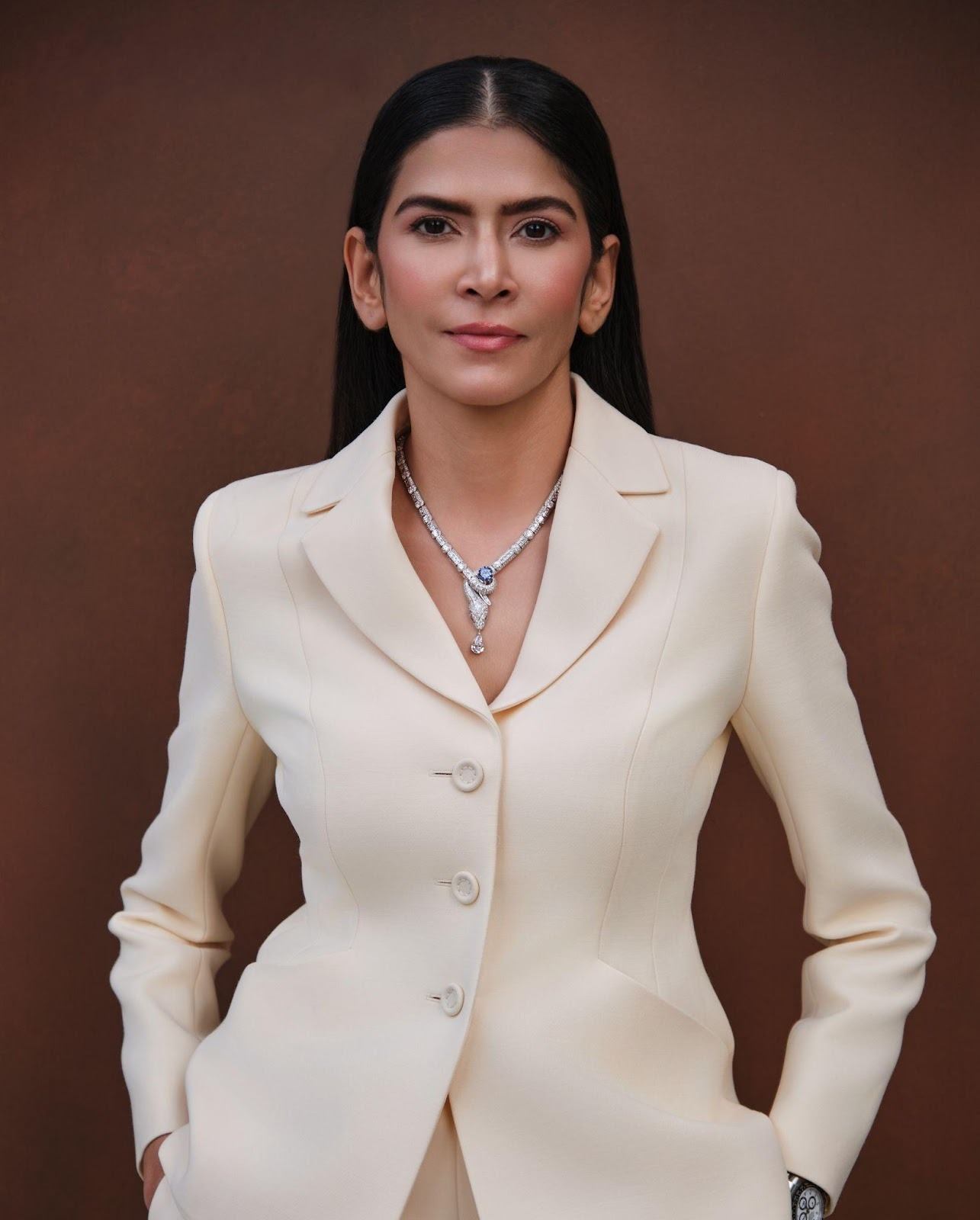
Was there a moment when you realised this was more than just a career for you?
There wasn’t a singular moment, but rather a gradual realisation. With every project, I found myself increasingly invested in the journey and not just in the outcome. In the process, the people, and their stories and global exposure. That’s when I understood this was not just a profession, but a lifelong pursuit.
Your philosophy says design is inherent in everything. How do you personally see design in everyday life?
Design exists in the smallest details, in the way light enters a room, in proportions, in the rhythm of everyday objects. I believe we are constantly interacting with design, whether consciously or subconsciously, and it shapes our experiences more than we realise.
What excites you most when you start working on a new project?
The beginning of a project is always filled with possibilities. It’s the process of understanding a new narrative, interpreting aspirations, and envisioning how a space can evolve into something deeply personal yet timeless.
What has been one of the most challenging phases in your journey, and how did you overcome it?
In the early years, one of the more defining challenges was navigating a space where I was often working with contractors who had on-field experience nearly double my age. Earning their trust and establishing my voice required quiet resilience and consistency.
Over time, as the practice grew, the challenge evolved into scaling while maintaining the integrity of design. I addressed this by building a team that shares the same values and attention to detail, ensuring every project continues to reflect a cohesive philosophy.
When working with clients, how do you understand their vision beyond what they say?
Often, what clients express is just the surface. I pay close attention to their lifestyle, their silences, their references, and even what they gravitate towards subconsciously. It’s about reading between the lines and translating that into a spatial language.
Can you walk us through how an idea turns into a finished space in your process?
It begins with intent and understanding the client and the context. From there, we move into conceptualisation, where ideas are explored through sketches and discussions. This gradually transitions into detailed planning, material exploration, and execution, where every layer is refined until the space feels complete.
As an architectural designer, what factors do you consider first when planning a space or structure?
Context is always the starting point, both physical and cultural. Orientation, light, scale, and movement follow closely. These elements form the foundation upon which the rest of the design evolves.
How do you balance aesthetics with functionality when designing large-scale luxury homes?
For me, aesthetics and functionality are not separate, they inform each other. A well-designed space should feel intuitive to live in while maintaining a strong visual identity. The balance comes from understanding how a space will be used and ensuring that beauty enhances usability.
Your work blends contemporary and classical styles. How do you decide the direction for each project?
The direction emerges from the client, the context, and the narrative we want to build. I don’t see styles as rigid categories, but as languages that can be interpreted and layered to create something that feels both current and enduring.
What part of the design process do you enjoy the most, and what still challenges you?
I enjoy the conceptual stage the most, it’s where ideas are fluid and possibilities are endless. What continues to challenge me is ensuring that the original vision remains intact through execution, especially in complex, large-scale projects.
How do materials, lighting, and layout influence the overall feel of a space in your projects?
They are fundamental. Materials bring texture and depth, lighting shapes mood and perception, and layout defines movement and experience. Together, they create an environment that feels cohesive and immersive.
As a founder, how do you balance creativity with running a business?
It’s about structure and trust. Having strong systems and a capable team allows me to focus on the creative aspects while ensuring the practice runs seamlessly. It’s a constant balance, but one that evolves with time.
In your view, what truly defines “ultra-luxury” in today’s design world?
Ultra-luxury today is about discretion and depth. It’s not just about opulence, but about thoughtful design, refined detailing, and spaces that feel personal, timeless, and effortless.
What advice would you give to someone starting out in architecture or design today?
Stay curious and patient. Develop a strong foundation, but also allow yourself to evolve. Design is not just about creating spaces, it’s about understanding people, culture, and context. The more you observe, the more meaningful your work will become.