She has always found her way back to art. From spending 12 years in the corporate world to becoming a full-time artist, her work has grown alongside her. Today, through women, memory and changing perspectives, she’s learning to see life differently.
Before we talk about your work, how would you introduce yourself to someone discovering you for the first time?
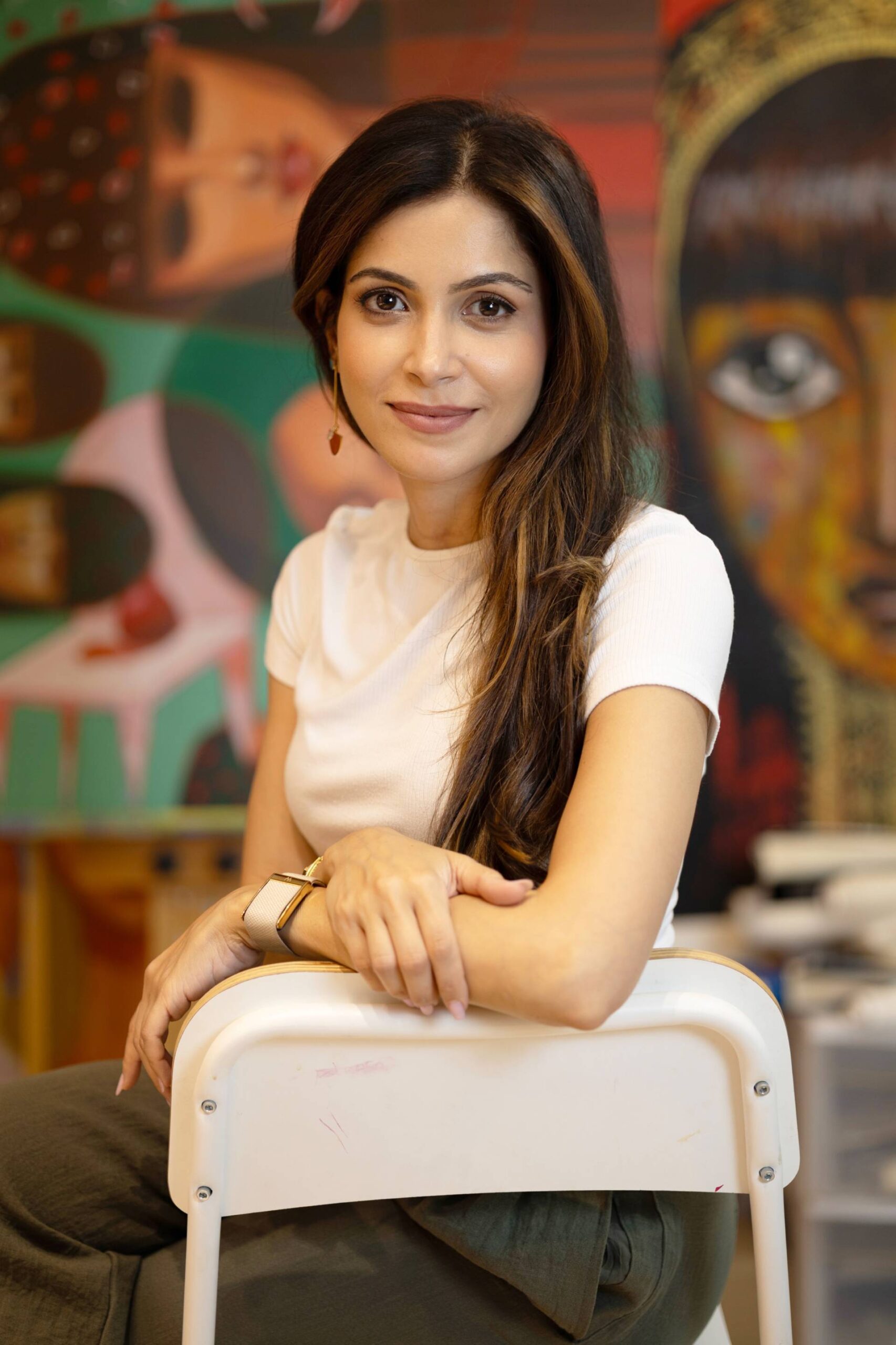
I’m a Bahraini visual artist whose work is deeply connected to women, identity, emotion and the experiences that shape us. For many years, women have been at the centre of my paintings, but the way I portray them has continued to evolve as I have evolved.
I’m also someone who has never been comfortable staying in one place creatively. I’m curious by nature, and I believe an artist has to remain open to change. My journey has taken me through painting, exhibitions, digital art and NFTs, international opportunities, and now into a new body of work that is questioning even something as fundamental as how a painting should be viewed.
Can you take us back to the beginning? When did art become more than a hobby for you?
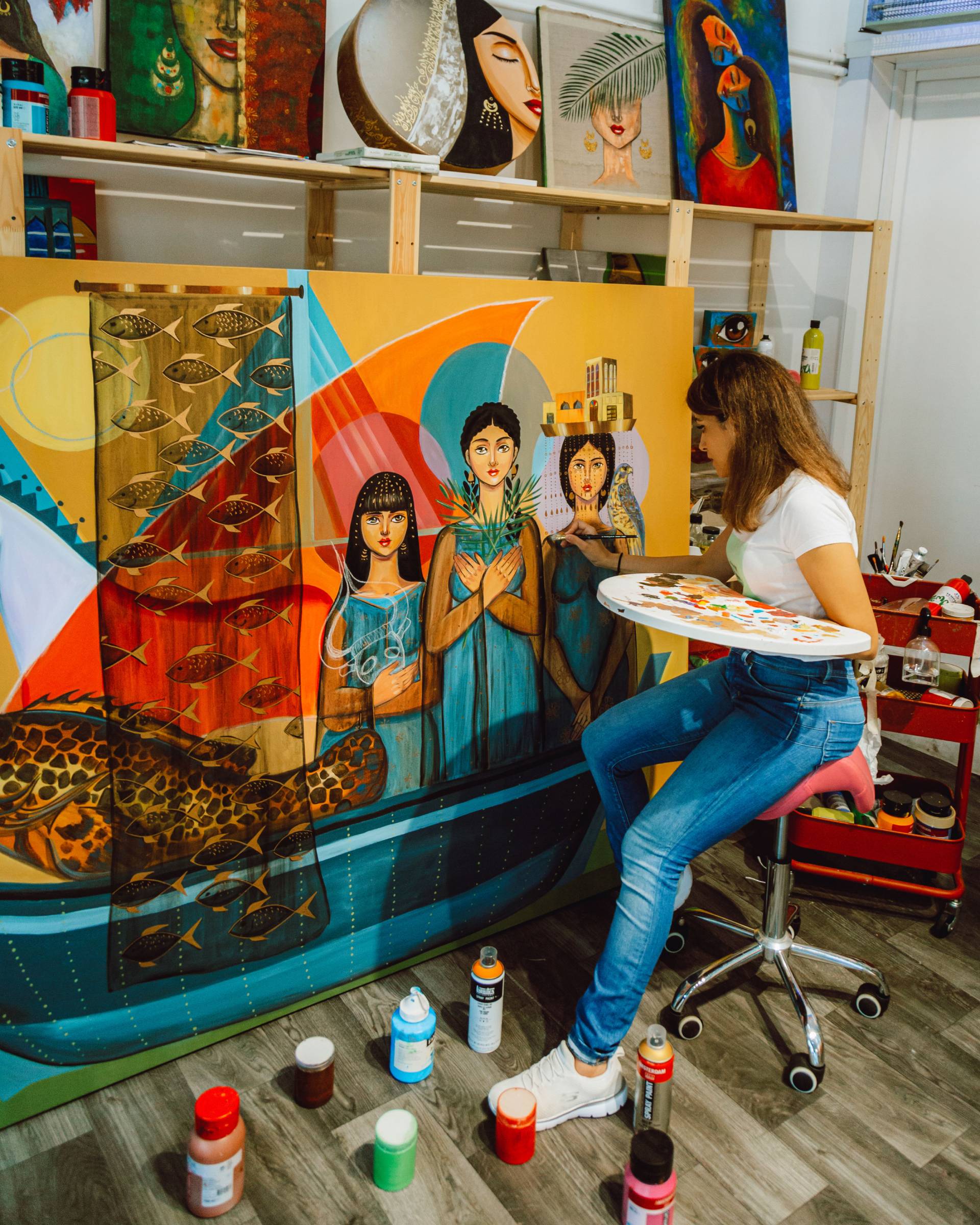
As a child, I dreamed of becoming a full-time artist, but not all childhood dreams become reality in the way we imagine them. I had never actually planned art as my career. I studied Business Management and went on to work in the corporate world for 12 years. But somehow, art had a way of coming back to me.
What began as something deeply personal gradually became much more serious. I started creating consistently, documenting and sharing my work, exhibiting, and finding opportunities to reach audiences beyond Bahrain. At some point, I realised I was no longer simply making art alongside my life; I was building a life around my art.
Interestingly, I don’t see those 12 years in business as separate from my artistic journey anymore. They taught me skills that later became incredibly valuable in building an independent career as an artist.
Your creative journey has taken many different forms. What has kept you open to exploring new mediums instead of staying in one lane?
I have always loved change and the excitement of asking myself, what’s next? I can’t stay creatively in the same place for too long. Once I become comfortable with something, I naturally become curious about what else I can explore.
That curiosity has taken me through different ways of creating and presenting my work. When NFTs emerged, for example, I was fascinated by what this new space could mean for artists and how technology could connect art with audiences beyond geographical boundaries. It became an important chapter in my journey, but it was never meant to be the final destination.
For me, experimentation is part of being an artist. Some experiments become important chapters in your practice, while others simply teach you something and lead you somewhere unexpected. I think both are equally valuable.
This past year has changed your life in many ways. How has it changed the person behind the artist?
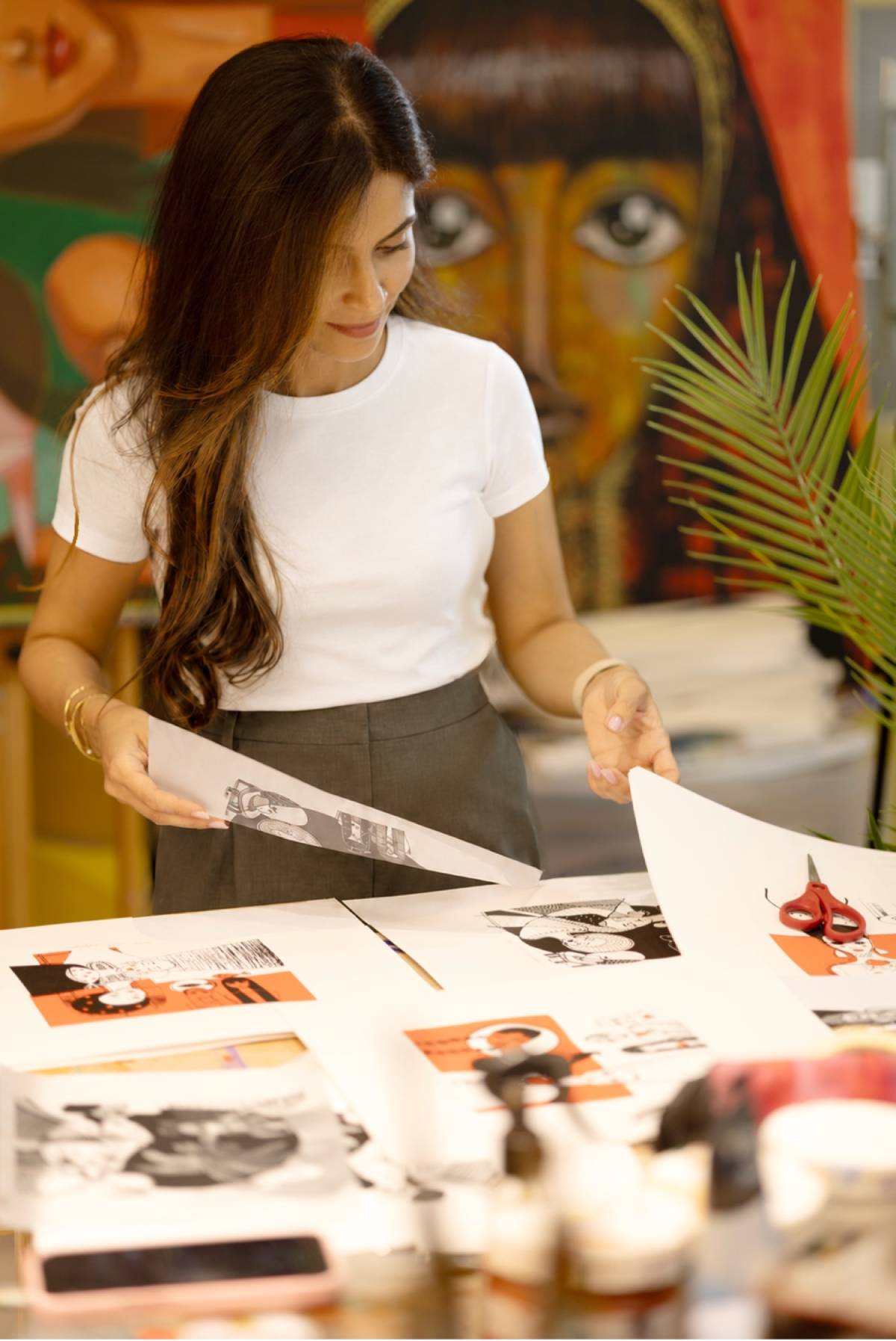
This has probably been one of the most transformative periods of my life. I went through several major personal changes while also facing cancer and experiencing the emotional impact of war around me. When several things you once considered stable suddenly change, your perspective inevitably changes with them.
But something unexpected happened creatively. Instead of making me stop, that uncertainty changed the way I approached my work. I became less interested in controlling everything and more comfortable allowing uncertainty into the painting. I think I have become more selective about what deserves my energy, more protective of my time, and much less afraid of starting again.
Fluid Perspective is such a beautiful title. What does it mean to you on a personal level?
Fluid Perspective began as an artistic experiment, but I later realised how closely it reflected what was happening in my own life.
Traditionally, I would begin a painting knowing its orientation. There was a top, a bottom and a starting point. During a particularly difficult period, I stood in front of a canvas and genuinely couldn’t decide where to begin. So instead of forcing myself to choose, I began working from different sides.
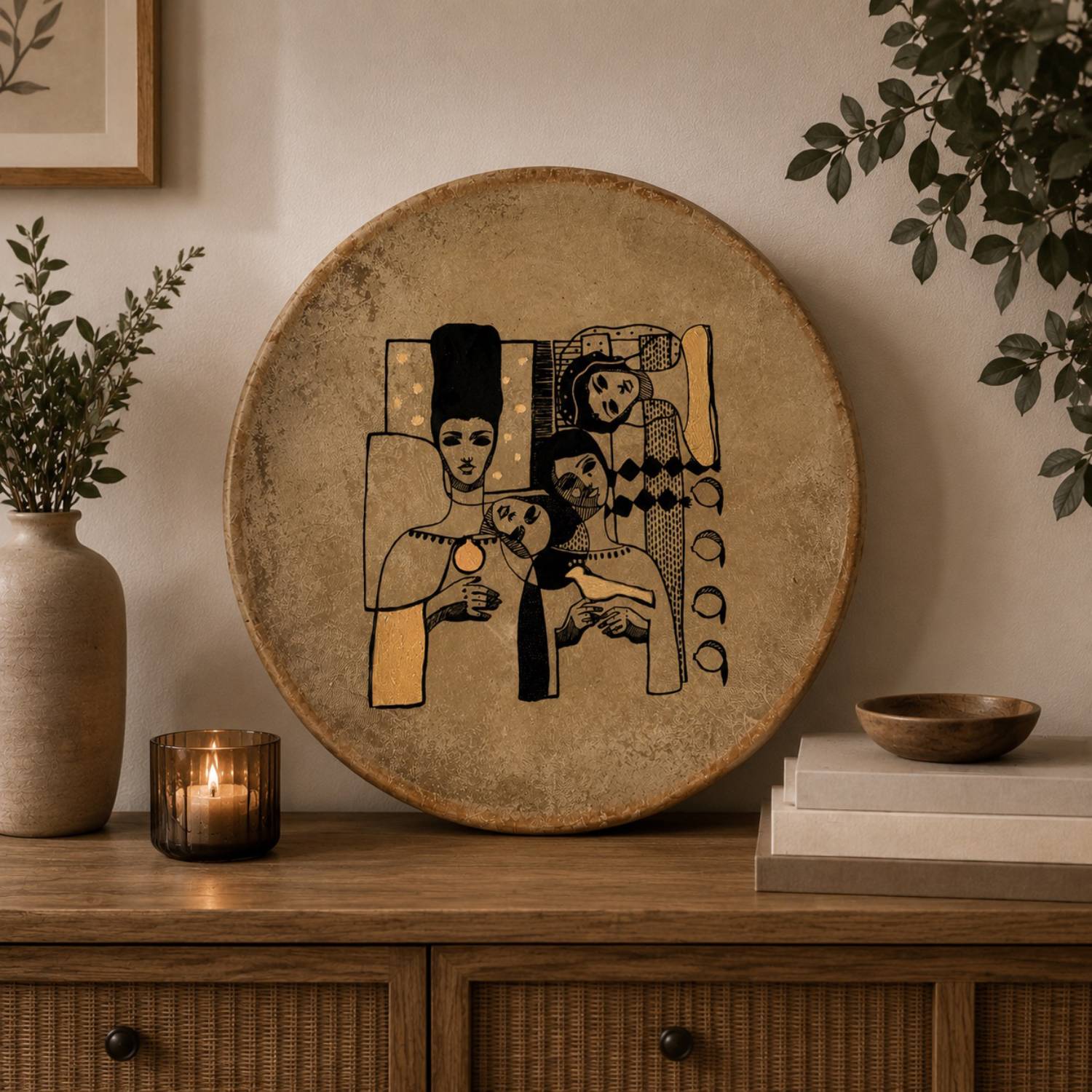
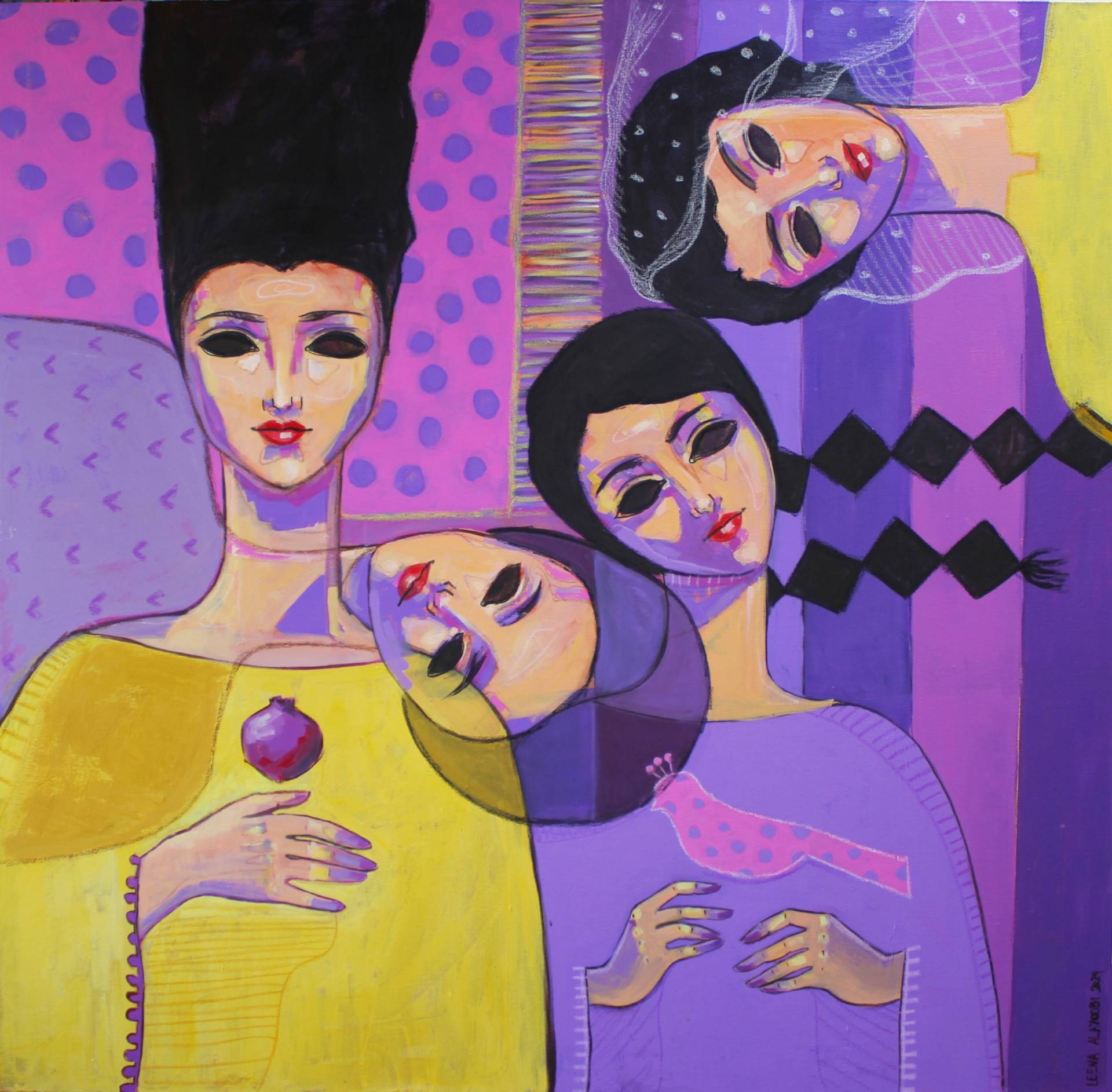
That became the foundation of Fluid Perspective. The paintings are created without one predetermined viewing orientation and can be experienced from different directions. Personally, it represents something I had to learn outside the studio as well: when life changes, sometimes the answer isn’t to force everything back into its original position. Sometimes you have to change where you’re standing and look again.
Was there a moment while creating this collection that completely changed the direction of your work?
Yes, the moment I stopped trying to find the “correct” side of the canvas.
I had always had a starting point in my paintings, but during that period I couldn’t find one. Eventually I thought: why does there have to be one? I began working from four different directions, initially without trying to make the different elements relate to each other.
When I rotated the canvas and realised the composition could continue to exist differently from another orientation, something clicked. What started almost instinctively became a question I now want to investigate much more deeply: what happens when the artist removes the fixed point of view from a painting?
Many people know your earlier work for celebrating Gulf women and identity. How does your art speak differently today?
The women are still there. They are part of my visual language, and I don’t feel the need to abandon them simply to demonstrate evolution.
What is changing is how they exist within the painting.
Earlier works often presented the woman more directly. She commanded the composition. Today I am becoming increasingly interested in allowing figures to emerge, disappear, overlap and become part of the surrounding space. I want the viewer to discover them rather than receive everything immediately.
Fluid Perspective is pushing that further because there isn’t necessarily one hierarchy anymore. A figure that feels secondary from one direction may become important when the canvas is viewed from another. For me, that opens an entirely different conversation about women, perception and perspective.
When you’re not creating, what experiences or places quietly inspire your next idea?
Inspiration often comes when I’m not consciously searching for it. Travel, architecture, fashion, food, conversations, places and small details of everyday life can all eventually find their way into my work. Sometimes something stays quietly in my memory for a long time before appearing unexpectedly in a painting.
Although the female figure has become a recognisable part of my visual language, I don’t necessarily see the women in my paintings as individual personalities or characters. A figure can represent a place, a life experience, a memory, an emotion or even a particular period of my life. I use the female form almost as a visual language through which I translate what I see and experience. What appears to be a woman in the painting may actually be telling a story about something entirely different.
Every creative faces moments of doubt. What helps you keep going when life feels uncertain?
I remind myself that uncertainty doesn’t mean I have to stand still. I have always believed in creating opportunities rather than waiting for someone else to create them or offer them to me. If one direction isn’t moving, I look for another, whether that means starting a new body of work, exploring a different medium, reaching a new audience, or creating a project of my own.
Art has also taught me that you don’t always need to know exactly where something is going before you begin. Sometimes you simply have to keep creating, stay curious and allow the next step to reveal itself through the process.
Looking back, is there a piece of advice you wish someone had given you at the start of your career?
I wish someone had told me earlier that being an artist and building an art career are two different skills and that there is nothing wrong with learning both.
You can protect the integrity of your work while also learning how to present it, communicate about it, build relationships, recognise opportunities and understand the professional side of the art world. Artists sometimes fear that thinking about the business side will make their work commercial. I don’t believe it has to. Understanding your career can actually give you more independence to make the work you want to make.
And perhaps most importantly: don’t wait for permission. Create opportunities as well as pursuing them.
What do you hope people feel after standing in front of one of your artworks?
I don’t necessarily want everyone to arrive at the same interpretation. In fact, I’m becoming increasingly interested in the opposite. I want someone to look once, then look again and discover something they didn’t notice initially.
With Fluid Perspective especially, I want that experience to become physical. Change the orientation and the relationships within the painting change. Perhaps another figure becomes dominant or something that seemed abstract suddenly becomes recognisable
If someone spends longer with the painting because they’re still discovering it, then the work has done something meaningful.
Finally, what’s one message you’d love to leave with women who are learning to embrace change in their own lives?
Don’t assume that because something changed, the new version of your life has to be less meaningful than the one you originally imagined.
We spend so much energy trying to keep life in the position we expected it to remain in. But sometimes circumstances move everything around. You may not be able to return to the perspective you once had and perhaps you’re not supposed to.
There is something strangely appropriate about what Fluid Perspective has taught me: when the picture no longer makes sense from where you’re standing, change your perspective. There may be another way to see it.