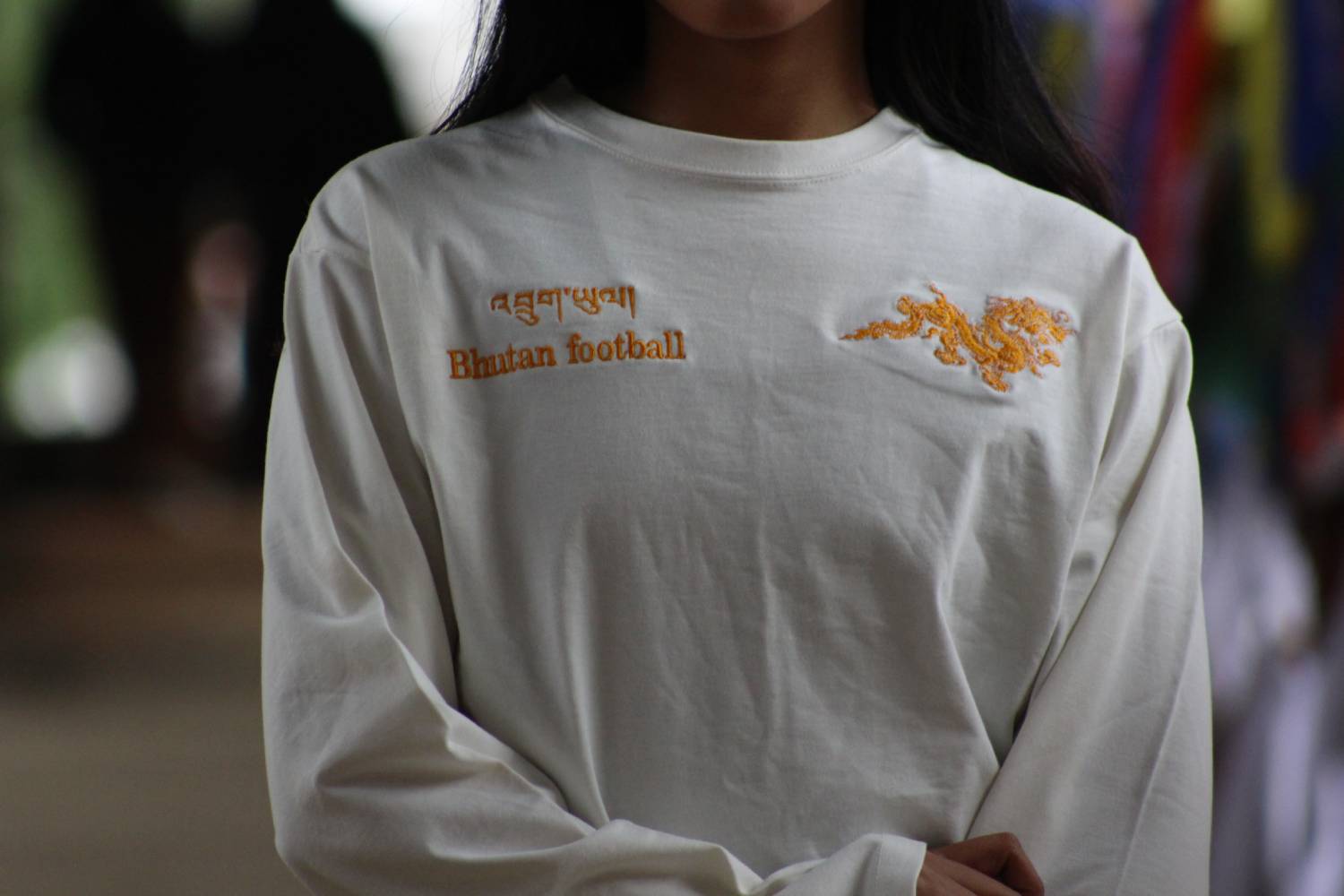
A limited 35-piece series reworks used cotton shirts into Bhutanese football jerseys, shaped by women artisans, reflecting culture, sustainability, and mindful design.
There is a quiet kind of beauty in clothing that does not try to be new but chooses to begin again. This latest collection from IDA GHALEY grows from that idea. It is not built on excess invention, but on transformation. What once existed as everyday cotton shirts is carefully reworked into Bhutanese football jerseys, pieces that carry memory, movement, and meaning within their seams.
This is a collection shaped by restraint. By listening. By noticing what already exists and giving it a second life.
From Worn Cotton to New Identity
The starting point is simple: used 100% cotton shirts.
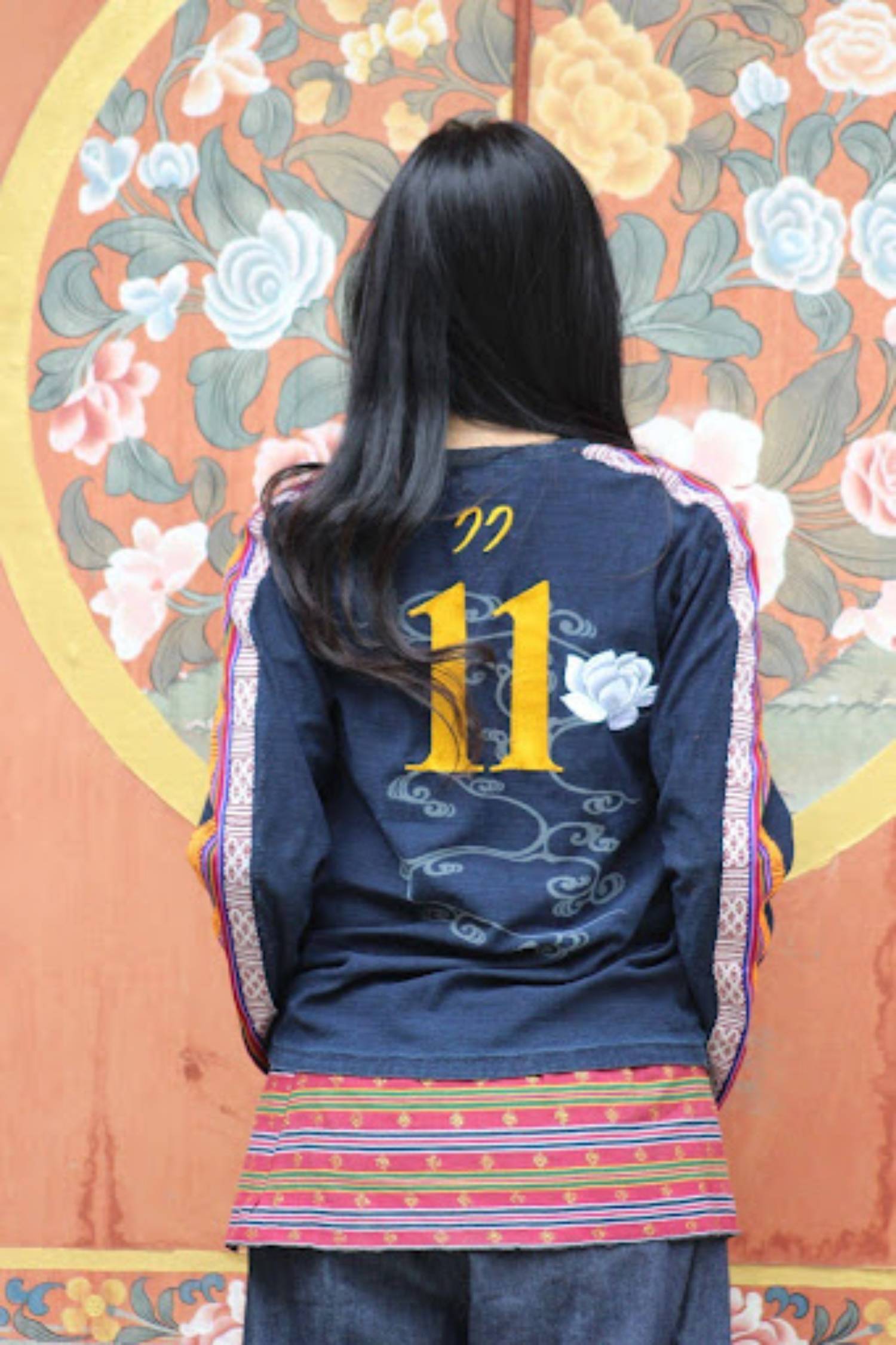
Instead of treating them as waste, the collection brings them back into use. These fabrics are reshaped into Bhutanese football jerseys, inspired by sport but reimagined through craft.
Each piece goes through a slow process of cutting, rebuilding, and stitching again. Nothing feels rushed. The fabric is not forced into something new. It is guided into what it can become next.
What emerges is not replacement, but continuation.
Made by Hands, Held by Community
At the heart of this collection are the women who make it.
Across Bhutan, home-based weavers, single mothers in tailoring groups, and women-led embroidery studios work on each piece. Every jersey passes through many hands, and every hand leaves something different behind a small shift in stitch, a slight variation in texture, a rhythm that cannot be repeated.
These differences are not flaws. They are signatures of human work.
Alongside them, young Bhutanese creatives student photographers and emerging directors document the process. Their perspective adds another layer, connecting tradition with a younger visual language.
The result feels shared, not owned.
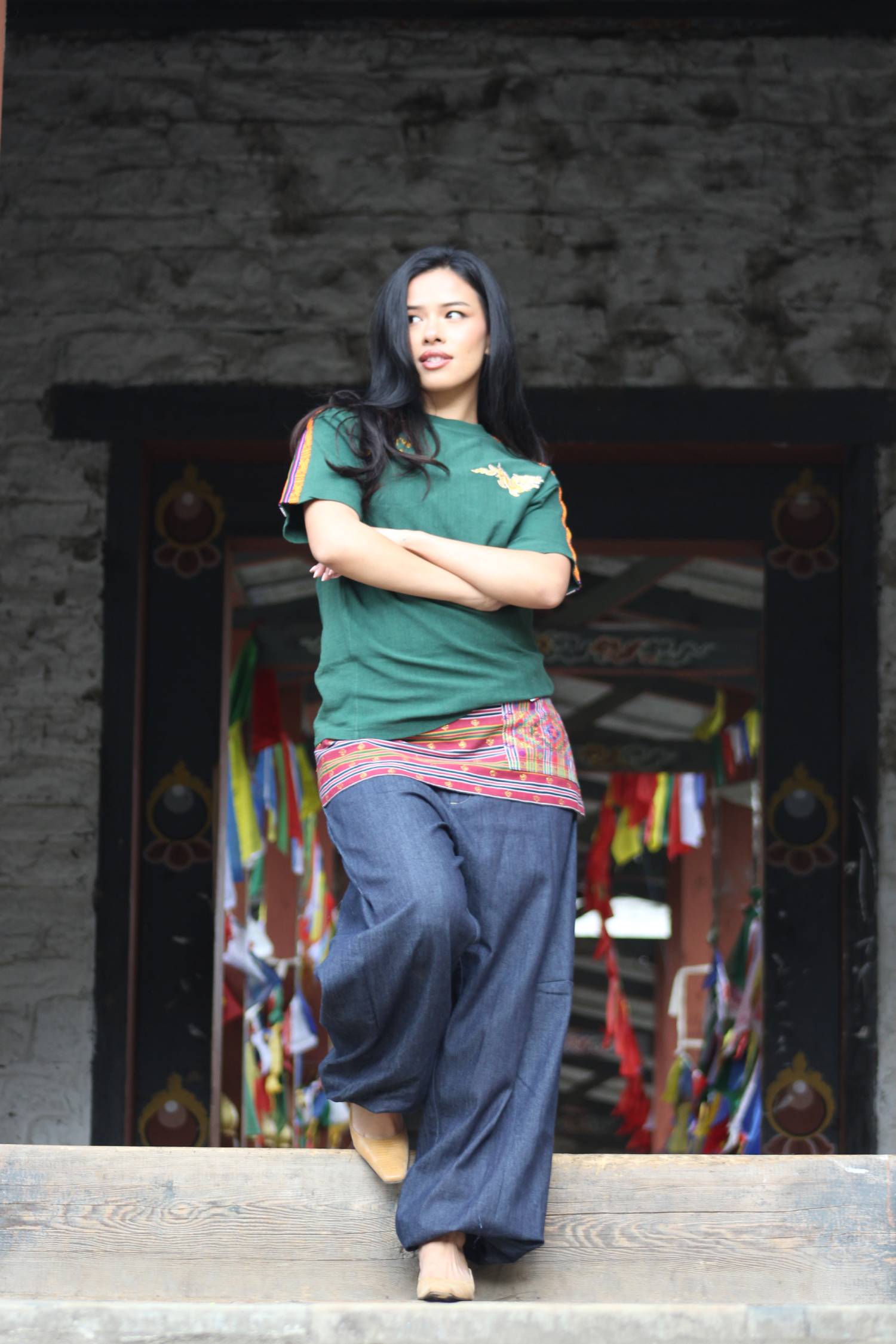
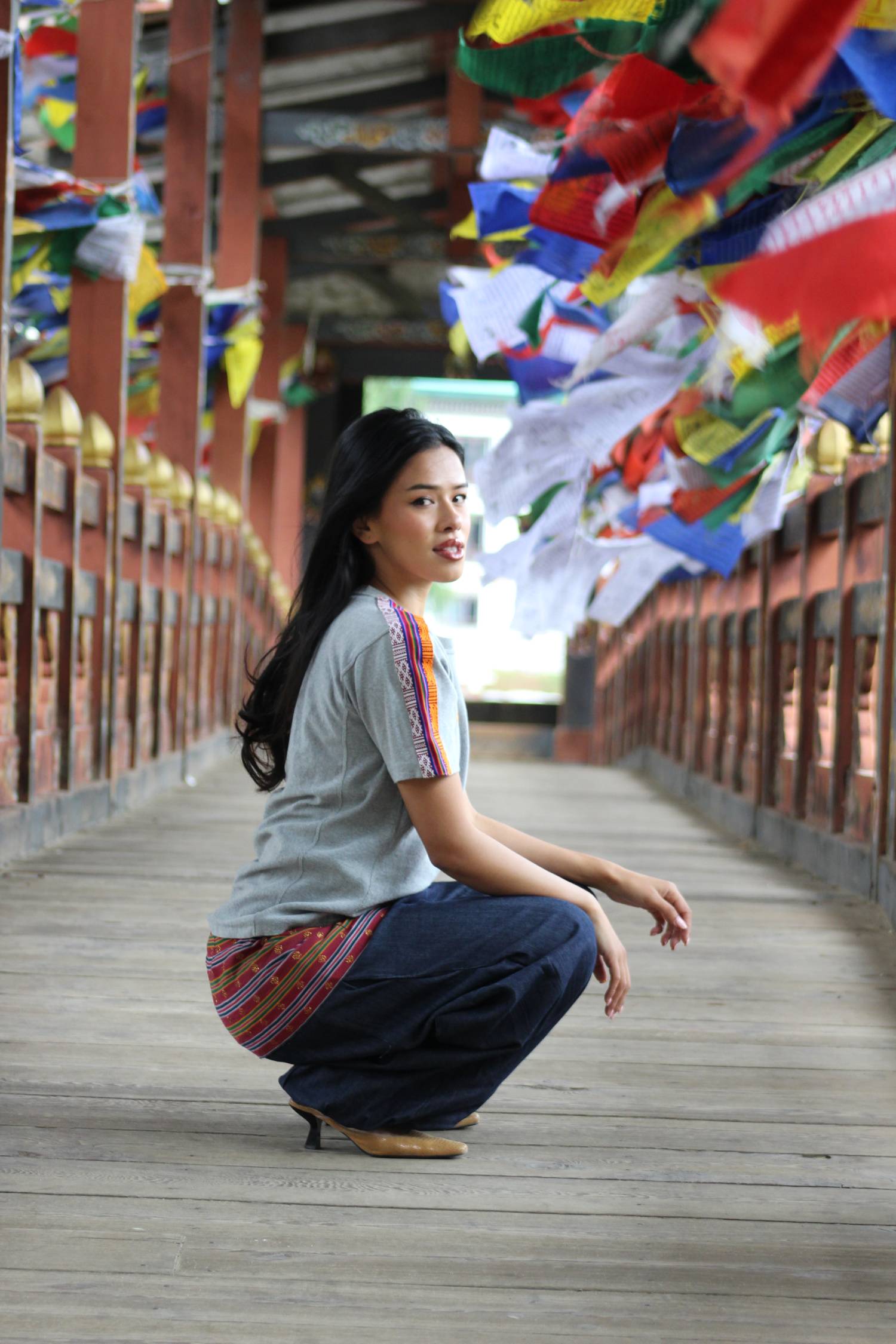
Female model and creative director
Design Language: Between Sport and Craft
The silhouette carries the ease of a football jersey open, relaxed, made for movement.
But the surface tells a softer story.
Reclaimed cotton brings a lived-in feel. It does not sit like new fabric; it sits like something familiar. The sleeves carry handwoven traditional Bhutanese patterns, fabrics normally used in national garments across Bhutan. Their presence within the jerseys adds another layer of meaning, connecting the collection not only to sport but also to the country’s weaving heritage. By bringing these traditional textiles into a contemporary form, the collection quietly supports the preservation of Bhutan’s weaving culture and the craftsmanship passed through generations. Embroidery appears quietly, not to decorate, but to hold attention for those who look closer.
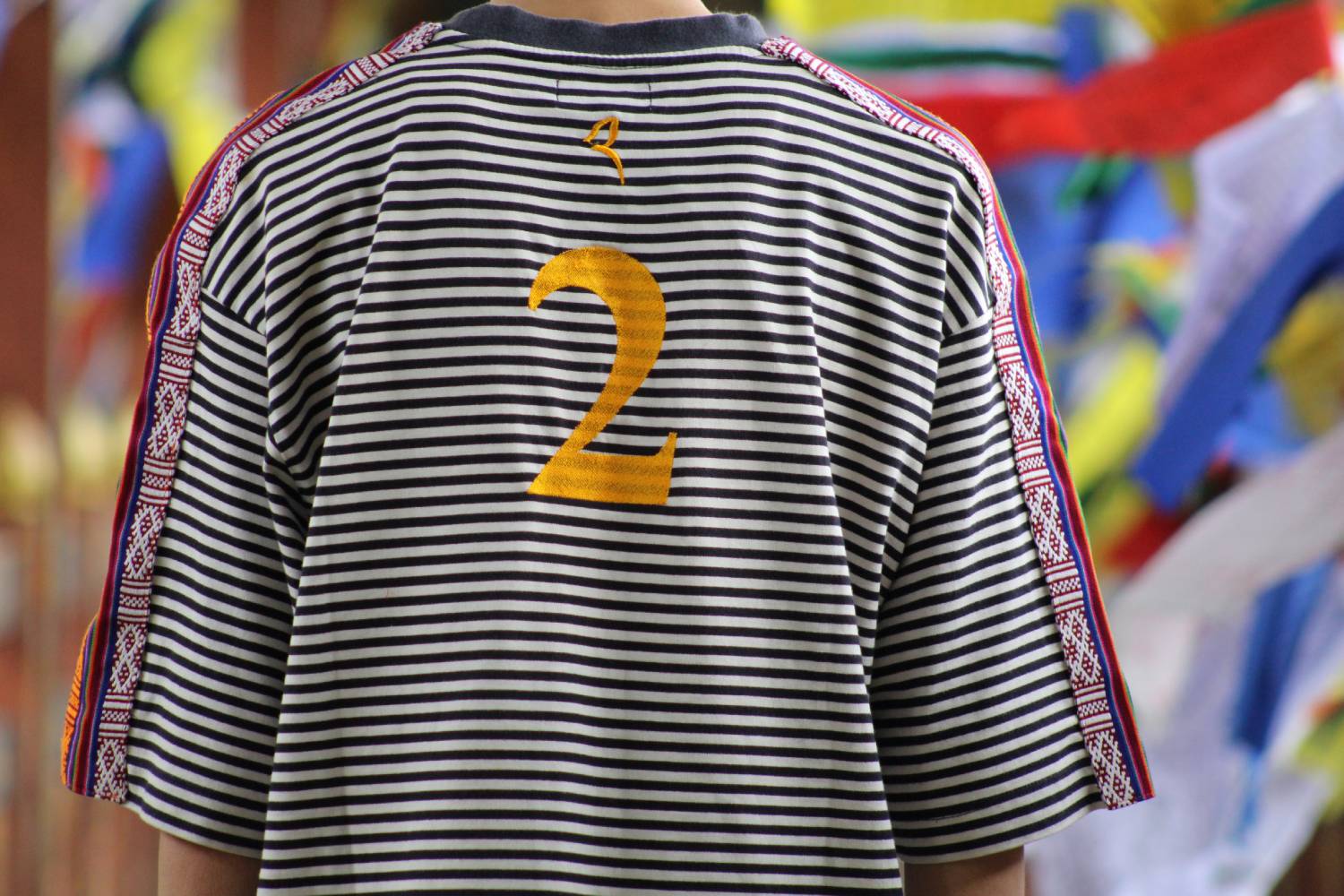
Male model and creative director
Developed in collaboration with the Bhutan Football Federation, alongside young Bhutanese photographers, emerging creatives, and local artisan communities who helped shape the visual and cultural identity of the collection.
There is no push for perfection here. The strength lies in the balance between structure and softness, control and imperfection.
It feels human in the most direct way.
Sustainability as a Way of Working
This collection does not start with new production. It starts with what already exists.
Used clothing becomes the base material, shifting the focus away from making more and toward making again. In a time of overproduction, this approach feels like a slower, more careful choice.
But sustainability here is not only about fabric.
It is also about people. By working directly with women artisans and community groups, the collection supports local skills, income, and independence. It keeps craft active, not preserved behind glass.
It also brings younger creatives into the same space, allowing learning to move both ways from tradition to new perspective, and back again.
This collection does not try to redefine fashion through scale or noise.
It works through attention.
Attention to material. Attention to people. Attention to what is already present but often ignored. In the end, it is not only a set of 35 shirts.
It is a way of thinking about clothing not as something that starts a new every time, but something that continues.