“I wanted to save a million women.”
What began as a question in the hospital turned into a mission beyond medicine.
Dr. Esha Chainani works at the intersection of clinical care, technology, and access focused on closing the gap between knowledge and the women who need it most, and reshaping how healthcare truly reaches them.
Can you tell us a little about yourself and what you do?
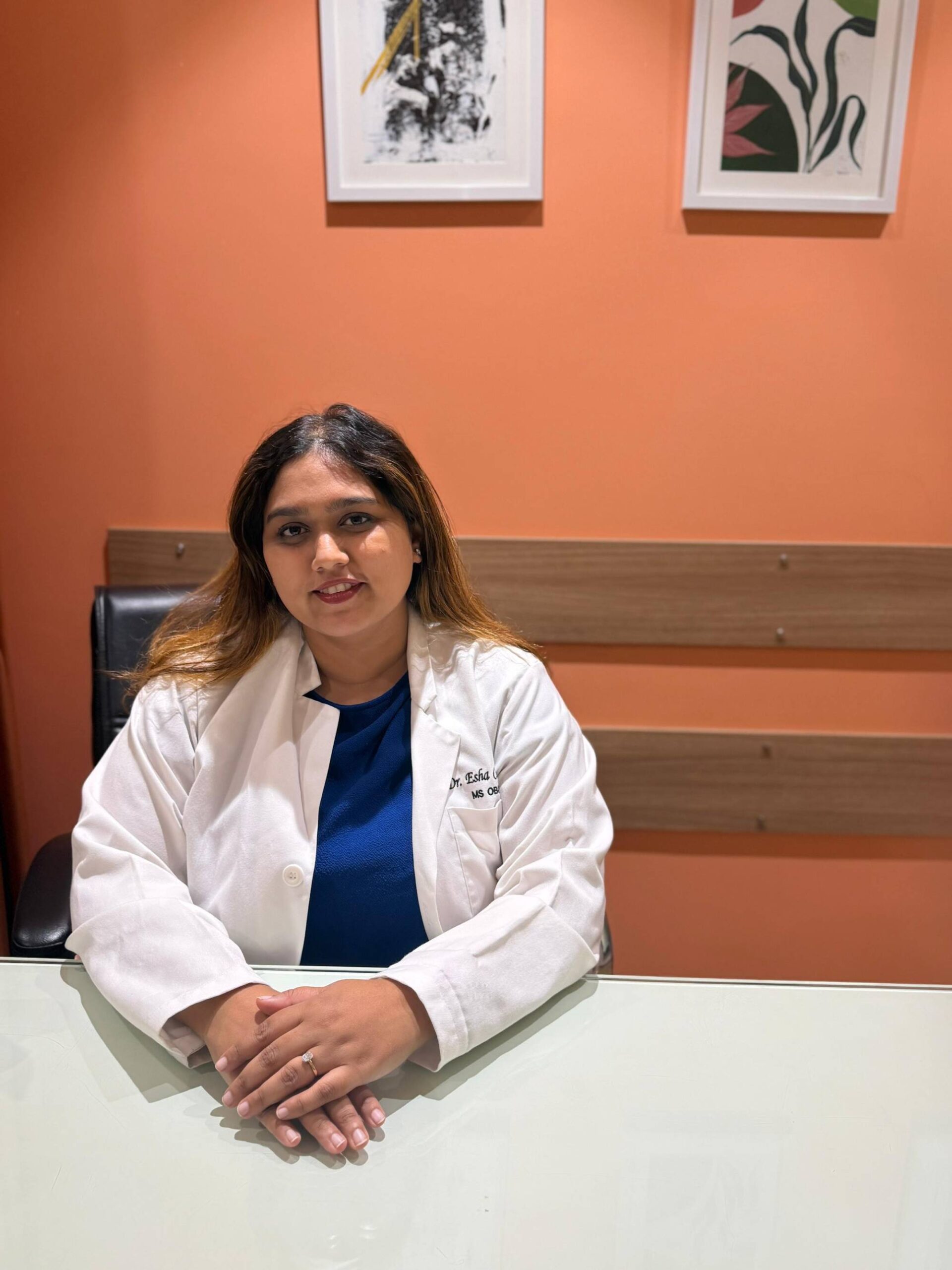
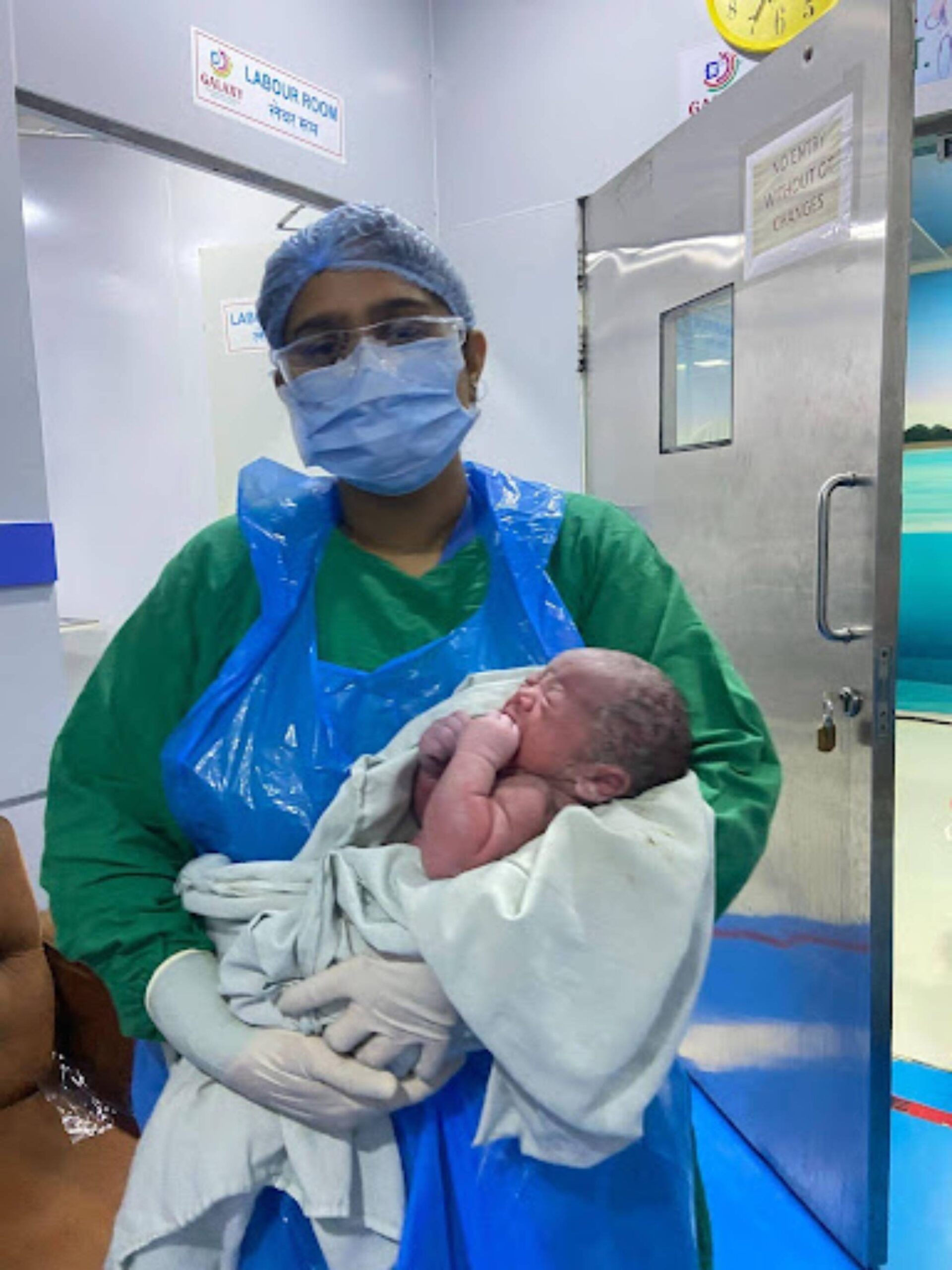
I’m Dr. Esha Chainani an obstetrician, gynaecologist, and fertility specialist, and I also work at the intersection of medicine and technology. My clinical qualifications are MBBS, MS, FMAS, and FCCS, and I’ve spent my career operating in two worlds that don’t always speak to each other as well as they should: the hospital and the boardroom. On one side, I still practise I perform surgeries, see patients, and do fertility consultations.
On the other, I serve as a Medical Advisor to Flo Health, one of the world’s largest women’s health apps, and I work with venture capital and private equity firms helping them evaluate healthcare companies through a clinical lens. Before that, I was Chief Medical Officer at Savage.
I also founded Premaa, a not-for-profit initiative to give women access to reliable, medically accurate pregnancy information in languages they can actually understand. At the core of everything I do is one purpose: to reach and improve the health of a million women.
What made you choose medicine in the first place?
My grandfather was a physiotherapist, and from a very young age he would take me with him to the hospital to observe his rehabilitation patients.
I remember watching those patients so intently, these people who had lost movement, who were in pain, who were rebuilding their bodies, and when he showed me the operating theatre, that’s when I knew I wanted to fix what is wrong and make people better. I wanted to operate. I wanted to solve the problem at its source.
That impulse towards surgery, towards precision, problem-solving, being in the room where the most critical decisions are made, never left me. Medicine was never really a choice, it was always the only direction that made sense to me.
When you started working with women’s health, what stood out to you most?
The inequality. It was stark and it was constant. I saw it in the clinic, I saw it in who was reaching us and who wasn’t, and I saw it in the way women’s pain and concerns were sometimes minimised or misunderstood.
I had gone into surgery wanting to fix people but what I began to realise was that the barriers women faced were not just medical. They were social, structural, cultural, and economic. Women were arriving late, or not at all. They were navigating some of the most profound experiences of their lives pregnancy, birth, loss, and fertility without guidance, without accurate information, and sometimes without anyone in their corner.
Women with problems that were ignored, pain that was overlooked. That stood out to me enormously. And as a woman myself, it felt personal. It became clear to me that this was where I was meant to focus my energy.I wanted to save a million women. That sounds bold, but it’s not abstract, it’s the number I go to bed with every night.
Was there a moment that changed how you saw healthcare?
It came from something I witnessed during my residency that I couldn’t stop thinking about. I was seeing women die in pregnancy, not in remote villages, not in places without hospitals nearby, but urban women, women with access in theory, women who should have made it. And I kept asking myself: Why? What is actually happening in the gap between a complication developing and a woman reaching care?
So I did what doctors do when they can’t let a question go. I researched it. I published a paper on the levels of delay in obstetric care, looking at where and why the breakdown was occurring. What I found was that the first and most significant delay was not distance, and it was not cost. It was awareness.
Women did not know what was happening to their bodies. They did not recognise the warning signs. They did not know when something had crossed from normal into dangerous. By the time they or their families understood the urgency, precious time had already been lost.
That finding became the foundation for Premaa. If the gap was in awareness (in that last mile between knowledge and the woman who needed it) then that was where I needed to build. Not another clinic, not another referral pathway, but something that could sit with a woman before she ever needed emergency care and give her the information that might mean she never gets there.
What made you feel the system was missing something bigger?
Medicine has extraordinary knowledge. The science of obstetrics, gynaecology, and fertility is genuinely remarkable. But a system that holds all of that knowledge and still fails to deliver it to the majority of women it’s meant to serve. That is a system with a structural problem, not a knowledge problem.
What I kept seeing was that the gap wasn’t clinical. It was a delivery gap. Information that could save lives was not reaching the women who needed it, in formats they could understand, in languages they spoke, in moments when they could act on it. That felt like an enormous, unnecessary failure.
And I felt particularly as a woman, and as someone who had grown up understanding what access to care looks like when you have it and when you don’t that I had both the responsibility and the ability to do something about it.
What did you want to change for women through it?
I wanted to shift women from being passive recipients of healthcare to being informed participants in their own.That is the change that matters most to me. When a woman knows what warning signs to look for during her pregnancy, when she understands her own body and what it is doing, when she feels equipped rather than frightened, that changes outcomes.
It changes when she seeks care, how she communicates with her doctor, and the decisions she makes for herself and her baby. Premaa was about closing the information gap, but the deeper change I wanted to see was a shift in confidence. I wanted women to feel that this knowledge belonged to them, not just to the doctors they could or couldn’t access.
The moment you overcomplicate something, you lose the very people who need it most. That’s why I made it simple, easy to understand and easy to adapt.
When you moved into health-tech, what felt new or different for you?
Scale. That was the most striking thing. In clinical practice, the impact you have is profound, but it is one person at a time, sometimes one life-changing conversation at a time. In health-tech, you can shape an experience that reaches millions of women simultaneously.
When I began working with Flo Health, which serves over 77 million monthly active users globally, I had to genuinely reframe how I thought about impact.
Something that has also meant a great deal to me in that role is being the only Indian on the team. Women’s health does not exist in a vacuum but it is shaped by culture, by family structures, by what is spoken about openly and what is not, by the particular pressures and expectations that come with being a woman in this part of the world. Those things are not always easy to articulate if you haven’t lived them.
Being able to bring that context into product and clinical conversations to say, this is how an Indian woman might experience this, this is what she may or may not feel comfortable disclosing, this is the cultural norm that shapes her relationship with her own body, that is a form of advocacy I take seriously.
The trade-off, of course, is complexity. You’re no longer in the room with the patient. You’re building systems, policies, and content that will be interpreted in thousands of different contexts, cultures, and health literacy levels. That demands an enormous amount of rigour and it is exactly where I believe clinicians need to be sitting, not at the end of the process to validate, but at the beginning, to build.
How do you balance clinical work with advisory roles and tech work?
I’ll be honest, it requires constant, intentional effort. These are genuinely different worlds with different rhythms, different languages, and different expectations of what “urgent” means. But I’ve come to see that the tension between them is also what makes both better. Staying in clinical practice keeps my advisory work honest. When I’m in a product meeting debating how to phrase a piece of health content or what features to prioritise, I can ask: Does this reflect what I actually see in my patients?
Would this help the woman I saw last Tuesday? And conversely, working in health-tech keeps my clinical thinking broader. It forces me to think at a systems level: about populations, about access, about what happens to women who never make it to a consultation. Neither world alone would give me that. So I hold both, deliberately.
What is one thing you always protect when you’re part of product or system decisions?
Clinical integrity. Always. I have been in rooms where speed was prioritised over safety, where engagement metrics were prioritised over evidence, and where clinical nuance risked being reduced to a single algorithm or a simplified piece of content. And I understand the pressures that drive those decisions.
Technology moves fast, investors have timelines, and teams are stretched. But healthcare is not like other industries. What we build here influences decisions, behaviours, and lives. The woman on the other side of that app is not a user in the abstract, she is a real person, possibly deciding her pregnancy, her fertility, her body. That reality is what I carry into every product conversation, and it is what I will not compromise on, regardless of how uncomfortable that sometimes makes me in the room.
What keeps you grounded outside of all your work?
My husband, my parents, and a very tight circle of friends, most of whom have nothing to do with medicine, which I think is essential. When you spend your days in operating rooms and boardrooms and product meetings, you need people around you who will simply talk to you like a human being.
My people keep me anchored to ordinary life in a way that I genuinely treasure. And then there is tennis. I played to state level under-16, it was a serious part of my life for a long time and I still play.
There’s something about the game that I love: it is entirely about the present moment. You can’t be thinking about a patient or a strategy document when a ball is coming at you. It is one of the few things that forces me to be completely, unavoidably here. That kind of reset matters more than I can say.
When you think about women’s healthcare today, what change matters most to you?
The change that matters most to me sits at the intersection of two things that are too rarely discussed together: scientific rigour and commercial viability. For too long, women’s health has been under-researched, under-funded, and under-built. The data gaps are real. Clinical research has historically excluded or underrepresented women, which means the products and protocols being built today are sometimes sitting on a foundation that was never designed with women in mind. That has to change, and I think it is beginning to.
What excites me is that there is now a genuine business case for getting this right. Platforms that are evidence-backed, clinically credible, and built with medical expertise at their core are not just better for women, they perform better. They retain users, they build trust, they reduce liability, and they attract serious investment. Medical credibility is not a constraint on product development; it is a competitive advantage. That is a message I carry into every advisory conversation I have, and it is one the industry is slowly starting to hear.
On the clinical side, the change I care most about is making women feel genuinely heard, not managed, not reassured without basis, but truly listened to and properly investigated. We are at a remarkable moment for women’s health: cutting-edge diagnostics, better hormonal understanding, advances in fertility, in endometriosis research, in menopause management. My job, both in the clinic and in the platforms I advise, is to make sure those advances reach every woman, not just those with access to a specialist in a major city. Better diagnosis, better management, and the confidence that her symptoms will be taken seriously. That is what I am working towards, and that is what the best health-tech can actually deliver when it is built the right way.